on the road preparations tools country information links about us contact home
ON THE ROAD: JULY 2007 photos: video:
previous / next month view our slide show mistakes (2,51 MB)

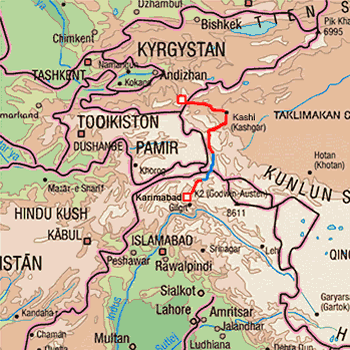
Irkeshtam (Kyrgyzstan) - Karimabad (Pakistan)

Kilometers: 642 kilometers and 100 meters
Riding days: 10 only this month. (bit slack!)
Weather: a lot of sun and high temperatures
Alti meters: 6384 meters
Best accomodation: Hotel in Wuqia (the one on the right side of the road just after the roundabout with the Kyrgyz hats in the city centre)

Special thoughts for a fellow cyclist:
* Didier was molested and mugged of all his valuables close to Karakol in Kyrgyzstan and had to abandon his tour to Beijing. He received help from Euro Support and returned to France for a successful operation on his jaw and where he is now recouperating. He is determined to continue his journey and our strength and best wishes go out to him.

Special thanks to:
* Bettina at Schwalbe for her understanding and allowing us to collect our replacement tyres at a later date in India. Reliable customer service is so important and we appreciate it very much and will continue to support those who support us!
* Trish and Paddy for the fun laughs, travel anecdotes and Grandma Mouth. Hope to see you both again somewhere in this big wide world.
* Sandra for letting us use some of her photos in our slide show

Breakdowns & repairs:
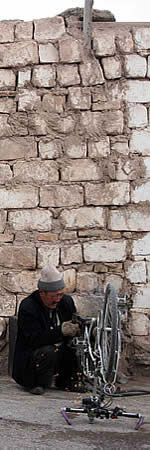
04: flat tyre (Son)
08: three new tyres fitted (Son 1, Ali 2)
09: flat tyre (Ali)
13: broken spoke (2x)(Ali)
25: flat tyre (Ali)

stove cleaning

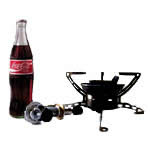
Tip of the month: A primus cleaning tip
Trouble with a badly burning fuel stove and you have done everything to try and rectify it? Probably due to a built up residue in the lines and places that you can't really get into to clean. And, no matter how many times you prick the fuel hole, it just keeps on clogging up.
Dismantle the whole stove and immerse everything in Coca Cola (overnight preferably). Before putting back together, wipe clean with a rag and make sure all parts are bone dry. It is probably a good idea, at this stage, to renew your fuel source as well. The problem is often caused by dirty or old petrol. If that's impossible, then filter the fuel through a coffee filter to remove any unwanted bits.

Note: Coffee filters are also quite useful for putting on the end of your water filter's inlet hose in high sediment areas. So, it is handy to carry a few with you and they take up hardly any space in your bags at all.
Want more tips? Visit our publications page for an overview...


Seman Hotel Internet Cafe, Kashgar, 09-07-07
A change of scenery
(Kyrgyzstan / A371 km. 62 to China / Kashgar: 4 cycle days; 259km; 1956m)
The plan is to camp close to the border town of Irkeshtam but it emerges out of nowhere before we find what we are looking for.(A371 km. 62 to Irkeshtam: 11km; 158m) It's a strange, eery location reflecting a transient, makeshift life. The place is full of truck drivers and their families. Rusted and beaten-up trailers systematically fill a dusty patch captured in place by a river to the north, border booms to the east and barbed wire running the entire southern length. The small farming village of Nura lies west. It's not a pretty sight but the inhabitants seem friendly enough. They just love having their picture taken, which keeps us occupied for the afternoon. We arrive early, and the two hotels are full. They offer us the storage room off the back of the kitchen, which is okay for one night, though hardly the privacy, nor amenities you would expect for the 100 som each that we pay. There's no running water in the whole compound and it never ceases to amaze me that while this simple necessity of modern life is a rarity in Central Asia, whopping large sky dishes and flatron televisions are not.

It's Sunday and we have to wait until tomorrow to cross into China. This is going to be a rather tricky exercise since the Kyrgyzstan gate opens at 9am and is two hours behind Beijing time. In other words, it will actually be 11am on the Chinese side. Seeing as the border closes at 12pm, we'll have exactly one hour to get in and out of Kyrgyzstan immigration and customs, ride 7km through no-man's land, past two checkpoints and up a small incline.

The following day and Ali and I get through easily but Sandra has a little more difficulty. Except for the Osh border, most officials neglect to stamp travellers passports, stating that they don't have a stamp and this becomes a problem when leaving the country. Of course, it's useless trying to explain that it's the fault of the Kyrgystan customs at the other end. After entering a few doors and talking to colleagues, the border control finally lets Sandra pass. We hit the first check point at 11.30am Beijing time and the guard purposefully holds onto our passports for an unnecessary amount of time. He probably wanted an extra monetary page in the passport in the form of a bribe. He doesn't get it and we stand as close to him as possible and badger him with questions as to why he won't give our passports back. He releases them from his hold 11.40am and we push on up the hill and land at another checkpoint before flying down to the Chinese border crossing. We arrive at exactly 11.55am, five minutes before closing.

Getting through is relatively easy, very professional in comparison to recent experiences and everyone is quite pleasant. I even receive the compliment of the month when the customs officer genuinely comments that I look so young. So, that is me set for the day. Even the threatening thunderstorms that we later encounter down the road, can't wipe the smile off my face. The landscape is really amazing with it's colour and wildness. Sharp toothed mountain ranges point directly into a temperamentally cloud filled sky. A red silt river runs with us for practically the whole journey. At exhilarating speeds, a tail wind not only pushes us downhill but also edges us up and over the inclines. Just before it really starts to downpour at 4pm, we make it into the community of Ulugqat (55km; 494m), where a rather dirty room with three old iron frame beds is offered to us for 30 yuan for the night. (10 yuan = 1 euro). The township toilet is not even half star quality and lies directly behind the open air butchery of an unfortunate wooly friend. Electricity comes on after 6pm. Restaurants in the form of someone's living room turned into an eating place are in plentiful supply and it doesn't take long before we find one that will cook us a vegetarian meal. It's tasty and fills the spot that didn't really get filled up at our earlier pause for lunch in a village 20kms after the border.

We retreat back to our room and are all contently reading when a loud rap at the door interrupts us. It's two local policeman: an older more official looking character with a younger, lesser rank and obvious spokesperson for his boss. "Passport" is the first word uttered and we immediately respond with "Why?" This always stumps them and they stand bewildered for a moment before continuing on with forbidding us to show our books to the local people of the town. I mean to say: no-one can speak English here, let alone read it. Anyway, we tell them we have no intention of allowing our English words to be scanned by the eyes of Ulugqat residents. We are also informed that we must move on tomorrow and while we can all barely refrain from laughing at the preposterous suggestion that someone would want to remain any longer in a place like this than absolutely necessary, we thank them for their concerns and bid them good night.Next morning, officials at the checkpoint up the road are too busy reading the morning newspaper to notice us slip through. We ignore the whistles and ride on. Again, the views are just as beautiful as yesterday, though there's a dryer element about what we see. A few camels are present. Does make us wonder why so many have said that the area is boring: "Chinese Desert" is what most have called it with a total lack of enthusiasm in their voice. I find it quite remarkably striking and there's a plentiful supply of water the complete stretch into Kashgar. Should you really need assistance there are always plenty of road workers or traffic to help you out along the way as well as a scattering of small villages.

The road is definitely not flat. It undulates it's way from Ulugqat to Wuqia (96km; 985m) in grand form and if it hadn't been for the strong wind from the back, the climbing would have been quite difficult. Some parts of the road are not so well bitumised as others, which means coasting down was not always at the desired speed. Still can't complain after the road from Sary Tash to Irkeshtam. We arrive in Wuqia at 3pm and find the first hotel we stumble upon a little expensive, so we try the next. The receptionist looks at me as though I'm the lowest life-form on this planet and before we know it, she's rung the police and there's six of them around us. An interpreter is also found because of course, no-one speaks a word of English. Passports are thumbed through several times, temporary residency forms need to be filled in and in total, two hours of absolute nonsense passes before they hit us with an extra 200 yuan deposit for the room. This we don't have and there are no ATM's or banks able to issue us with money. We decide this is all too much and the friendliness factor at this hotel scores a figure well in the minus range. Back at the other hotel, where they don't ring the police and where we explain that we don't have the money for a deposit, there's absolutely no fuss. The room is totally fabulous: all the mod cons and super clean. Extras include a toothbrush and toothpaste, toilet paper, shampoo, shower gel, running hot and cold water, as well as a television, electric kettle, teabags and the most comfortable bed with white crispy linen that smells of heaven. Not hard to tell that we have been deprived of a little comfort of late. The restaurant next door to the hotel cooks us our first feed of green vegetables in I don't know how many months. More heavenly than those white sheets. If you are stopping in Wuqia, then there's also an internet cafe, which will be the first connection since Osh in Kyrgyzstan.

The road from Wuqia to Kashgar (97km; 319m) is almost downhill the whole way. We fly along even though a headwind stops us from making record speeds. Still, the 23.3km/hour average is enough to get us into Kashgar well before 3pm. At the start of the day, mud housing with carved wooden entrances dot the roadside in a rather dessert like landscape. The scenery is not so entertaining in the initial stages. From the Torugart turnoff onwards the roads are simply superb, with a wide shoulder for slower moving traffic. At some stages, we fly past at 45km hour. One of those fabulously invigorating rides. Soon, tree lined streets and small villages take over the surroundings. Vibrant markets and mud brick houses with ornately carved doors and colourful fresco paintings keep us engrossed until we hit the highway. Immediately, another feel captures us as we enter Kashgar. It's more civilised. Not at all difficult to find the cluster of Hotels on Seman Road: where every foreigner stays and every taxi driver knows how to get to. We choose to stay adjacent to the infamous Seman Hotel, which judging by it's enormity could cope with the entire Kashgar tourism trade by itself. Hotel Sahar is half the price at 80 yuan for a double room and although it's not where the Queen would prefer to stay, it's okay by our standards. Facilities include own bathroom, running hot and cold water, both for washing and drinking, fan, television and if you are polite and friendly, then the staff are exactly the same back.

Traffic Hotel front desk, Tashkurgan, 20-07-07
The boy's are back in town
We frequent John's Cafe (located at the back of the Seman Hotel) every morning for breakfast. Although a well-designed snare for westerners, it is a great place for meeting other travellers and just chilling out in the later part of the day when the blistering sun gets a little too much. The staff are really friendly which is an added bonus. Emerging from this sanctuary a couple of afternoon's later, we spy the infamous white Nissan Patrol from Urs and Jonas: two German guys we met in Osh. The Torugart pass roads have had their toll on the tyres: one is completely flat and the other blown beyond repair. Nice to catch up with them again and hear about their adventures and restrictive travel in China. Basically, you are not allowed to drive your own vehicle without a guide and leading car, which means your itinerary is fixed and it costs you a wad of money.

Kashgar is quite modern on it's facade and enough fashionably dressed, young individuals prance the boulevards with obviously plenty of money to spend in the cluster of beauty, clothes and shoe shops. Behind the makeshift barriers though, is another life. That of the mud brick houses being demolished to make way for new more prestigious buildings. The Uyghur families still living in half accommodation, hanging in there, until the inevitable happens. These people are more akin to the ways and features of Central Asia rather than China and it is apparent that there is a definite line drawn between the two communities. There are also a remarkable amount of beggars on the streets, all Uyghur people. Still, it makes no difference to the hospitable atmosphere in this city for the average tourist. There are plenty of hello's, smiling faces and helpful shop-owners to make your stay in Kashgar very pleasant.One of our missions, besides filling our stomachs with decent food after Central Asia is to find a bike shop and surprisingly enough, after several long walking attempts we find two: a Giant store which stocks quality parts and accessories and 500m or so further down the road and on the other side is a Merida store. For other fix-it jobs, you can try your luck with one of the numerous bike repair places around town. The guys on the corner below the Sahar Hotel seem to know what they are doing and are never without a customer, which is an advertisement in itself.

Probably the most frequented sight in Kashgar, is the livestock market on Sunday. Taxi fare is around the 10 yuan mark and though not the spectacular scene promised in guide books or by locals, it does have a certain ambience to keep you and every other tourist in town entertained and snapping for a few hours. Everyone then ventures to the normal Sunday market, where you can buy everything and anything. Make sure you barter though: prices can be outrageously expensive on first quote. The following day, we bump into Trish and Paddy in the foyer of Seman Hotel. We had previously met in Samarkand and Tashkent. Kashgar is just one of those crossroad places where you are bound to catch up with fellow travellers. We spend many an hour in John's Café chatting and the multi-coloured flagged Intizar restaurant eating, on the main strip, before we depart a few days later for Karakol Lake.


All filming mistakes in a row

We feel totally No-mad
(Kashgar to Tashkurgan: 4 cycle days; 1 rest day; 293km; 3307m)
This is the start of the Karakoram Highway (KKH): one of the "be all and end all" of cycling dreams. After a well earned rest and full digestive recuperation in Kashgar, we set off south, with great enthusiasm, towards the Pakistani border.

Does a donkey shit on the road?
The morning of our departure and a storm brews. Rain and wind ground us in Kashgar till almost lunchtime. We follow the road out of town and village life seems to continue forever. We hit the township of Shufu (16kms from Kashgar) and the road begins to climb ever so gradually. We have headwinds which is not particularly pleasant but the road is fabulously smooth and there is relatively little traffic. There's not too much to see apart from the numerous villages we pass through over-populated with donkey drawn carts. Consequently, you have to dodge the overwhelming amount of donkey poo lining the roadside. Opal is the last big village we see. It's 48km out of Kashgar and has everything you could possible want in the way of food and drinks. Red mountains are directly in front of us but the view is not so spectacular due to the gloomy weather. The sun tries to break through on occasions but with no luck and after 86kms and 546m we pull off to camp by the river near Oytaq and just before it decides to rain.

Nan...Nun...Naan...depending where you are
In true Central Asian form, we open the tent to see a man squatting directly above us, on the side of the road, just plain gawking. For an annoying amount of time, because I haven't fully woken up yet, he remains fixated with every move we make and doesn't get the message to shove off until I zip up the tent putting me and everything out of his sight. He eventually leaves and we see him 300m further on, doing the same thing. We later work out that this is probably the three Russian cyclists that we later meet on the way. Just up the road is the tiny village of Oytaq, where you can purchase basic vegetables and other food supplies including what I have nicknamed the Chinese rock bagel. As my name suggests the outside is incredibly hard and impossible to break open without using a knife. The first time I bought some, I thought the woman was trying to sell me stale bread. Inside it's compact tight dough makes for a longer chewing session than normal but they are quite tasty when you get used to them. They usually cost half a yuan each. I buy six, some string beans and tomatoes. Not even a kilometre after our purchase and Ali discovers he's broken a spoke. While repairing the wheel, we meet Alexander, Anatoli and Benjamin. They have cycled from Samara in Southern Russia and intend to reach Tashkurgan before turning around again and going back home. Benjamin is about to turn 70 years of age and while their speed is considerably slower than ours, its quite remarkable to see such biking enthusiasm in this challenging terrain. As I am truing Ali's wheel, maddeningly another spoke breaks.

Red, red rock...goes to my head
The ascend to Ghez begins almost immediately and we reach the checkpoint station after 39kms and 600m of climbing. There are some relatively steep sections along the way but the roads level off at regular intervals to give you the chance to energise enough to face the next incline. Ghez also has snacks and drinks available.To one side of us a river torrents and you can't help but try to imagine its supreme power in Spring. Huge stone cliffs tower above us and radiate red against the perfect blue skies. Echoes of gushing water ricochet across the gorge. Directly above and through squinted eyes glaciers originating from cloud covered peaks shine blinding silver light. Its mind-blowingly beautiful.

Adding to the beauty of this trip is the immaculate condition of the road. Except for a handful of 20-40m patches, where the river obviously floods over, it's the best road we have ever cycled on. (yes, including Europe!) While the Chinese haven't quite got the knack of building sturdy enough road signs, they are champions when it comes to laying bitumen. Over the next 12kms we traverse a tiring 400m. Near Ghez (52km; 1060m) we find a semi-secluded spot in a quarry overlooking the day's uphill path and edging magnificent snowcapped summits of some of the highest mountains I've ever seen. We are but a dot in this landscape image.

The yurt experience...err...hmmm...totally over-rated!!!
Headwinds, side winds and every other possible wind tries to foil today's journey. We start the morning in intense sunshine and have to climb 600m or so out of the valley. After 16kms, we reach the turnoff to Maji (28km from Ghez) and view the rather out of place sand dunes before us.The KKH has this amazing and forever-changing landscape that by the end of each day, it is quite t difficult to recollect everything you've seen. Today the weather emulates this phenomenon as well and just past Bulungkol, a puny speck of a village full of touristy souvenirs and little else, a sand storm blows unexpectedly from the side. As soon as we have safely made our way out of it's violent force, the temperature drops from 25°C to 8°C in a matter of minutes and it begins to rain. At first only a spattering of drops but soon we find ourselves in a full-fledged storm. Luckily for the road workers camp just up the road, where we shelter in a cabin and next to a delightfully warm pot belly stove. Unfortunately, the employees don't speak any English and our Chinese is nonexistent, so the next 15 minutes are spend in relative silence.

The storm disappears as quickly as it had appeared and we are soon cycling on in glorious sunshine with the monstrousKongur Shan (7719m) to our left. We estimate that Karakol Lake must be 10kms from here and while the first 5 kms is reasonably flat, at the end of the day, the last 5kms are a long and winding grind to the 3683m pass. As we near the top, the famous Mustag Ata (7546m) comes into full view. The translation speaks for itself: Father of Ice Mountain and he remains a wondrous spectacle in our sight for the coming days.

We are accosted by the first set of yurt owners to come and stay with them as we round the bend and considering the likelihood of rain, we accept. (near Ghez to Karakol lake: 55km; 1104m) Finally, we get to stay in a yurt and after the experience, all I can say is give me a Chinese Hotel for the same price any day! (30 yuan per person) Much more comfortable. For a start, the damned thing leaks when it rains and I spend a good part of the first night wide awake listening to the irritating sound of rain splashing on the carpets around me. Naturally, it's made out of animal hide which leads to a musty, dampness that constantly fills your nostrils and when it's cold outside, which it is while we are there, it's also freezing in a yurt with no electricity or heating possibilities. There's no bathing facilities either. Furthermore, the toilet, if you call a catchment area full of human urine and faeces underneath a portable cabin with a long rectangular hole cut into the floor, a toilet, is a reminder of how different this aspect of human nature is handled in the West.

Anyway, we sleep in until 11am (Beijing Time). Obviously required by our exhausted bodies, but even with all that sleep, I arise with a migraine. Partly sunstroke, partly windburn and the high altitude I guess, but it nags me incessantly all day and I can hardly do anything other than lie flat and try and sleep. We do cycle up to the next village to see if there are any food supplies worth acquiring, however there is little else than a few tin shack stores with biscuits and snack items on sale. Even though we had enquired after a shop the day prior, we find out upon return that there is a yurt just a few 100m from where we are staying selling food and other products.

Shitting in your own backyard
While the whole Karakol Lake set-up looks traditional, it's really nothing more than a big tourist attraction trapping more and more visitors each year. Bus loads of snap-happy Chinese and Westerners are dropped off for 20 minutes to part with their money on horse and camel rides or supposedly traditional handicrafts. We have been warned that if we set foot on the road used by the tourist buses and leading directly to our yurt, we will incur the cost of an entry ticket. Alternatively, we are supposed to use the less refined route, across unpathed rocky terrain and past the toilet stench. Here, a line of face-masked women wait patiently for the use of the toilet, while men just walk within a 50m radius of our yurt, drop their dacks and push a turd out onto the pasture land. The Chinese, believe it or not, even continue filming the landscape during the process. Talk about multi-tasking! I decide against either of these options and head towards the overflow tunnel. Unfortunately, I'm not the first person with this initiative and I'm forced to tippy-toe through a 20m stretch of human crap before exiting on the other side and finding a safe zone to wee.

Further on down the road and also renowned for it's disgusting amenities, you can't miss the Karakol Lake Resort. It's pompous gateway and wired cordoning complete with preposterous signage demanding money to enter the premises are sad evidence that this is purely a money making scheme. And beware, if you happen to wander close to this zone while strolling at any time of day and from any direction, management will try and get a 50 yuan fee out of you for simply looking at the lake. Campers around the lake will undeniably be hassled and we spoke to a few gullible travellers, who parted with 25 yuan each for setting their tent up on the grassy banks of the lake.

You can eat in the yurt for 10 yuan per person, per meal, which is double the street price for the laghman (noodles with tomato, vegetable and mutton topping) you get served for dinner and more than ten times the local cost of the plain bread (often stale) and pot of tea dished up for breakfast. And the mealtime doesn't just comprise eating: no, you will be forced to look at all the cheap and tacky souvenirs the yurt dwellers have tucked away in little cardboard boxes. What's more, if you think after the first evening you are scott free and have managed to convey that you are not interested in their wares, you are in for a shock, because without a doubt, the following evening you'll be directed to another yurt for the same dinner and the same rigmarole will start all over again.

On the more inspirational side of things, the human intervention at Karakole Lake cannot however, take away from the absolutely stunning nature surrounding it. It is a photographer's and daydreamer's fantasy and you could click and stare away until the memory card is completely full. Each second sheds a new light, presents another cloud formation, emits fresh colour. Forever captivating.

On the top of the world: Carpenter version not the Japanese punk interpretation by Shonen Knife
(Karakol lake to Tashkurgan; 100km; 597m)

After a rest day at Karakol, it's time to conquer the highest pass we have been faced with yet. Our aim is to reach Tashkurgan in one day but there's climbing to do at around the 4000m altitude mark. Headwinds again, attempt to thwart our plans and we struggle the first 23kms of almost no gradient roads. The last 7kms up to the pass, under normal circumstances wouldn't be a problem at all. They are an average of 5%, but the wind factor and the altitude make the ascend extremely difficult. It is essential that you find your rhythm in these conditions. The slower, Carpenter's version of "On top of the world" plays over and over in my mind as the pedals go up and down to the beat. I try and stick to it, but any bodily interruption to this, being a cough, burp, the need to spit, and you'll find yourself gasping for air. And I mean in a scary sort of fashion. Almost like your body cuts out for a miniscule fraction of a second. Just as the song says: such a feeling coming over me. Talking or drinking is virtually impossible unless you stop and needless to say, this is a frequent occurrence over the one hour crawl until we are triumphant but out of breath, on top of the world.

The reward: the view from Ulugrabat Daban (4098m) and the 30km downhill coast that follows. Even with headwinds, we manage 40+ kms per hour on roads as smooth as a baby's bottom. Landscape is dessert-like until the valley Tagarma. Road levels out here and we anticipate the steep climb mentioned in LP out of this basin. We continue to follow a downstream river and logic prevails: no scaling is necessary, unless you consider a couple of hundred metres at 6% incline, steep. Either the Chinese have blown up the pass and build a new road since the LP research , which is entirely plausible, or a novice cyclist was responsible for handing over rather dubious information.

We fall into yet another valley and Tashkurgan can be seen in the way off in the distance. Ten kilometres later and we pedal in around 6.30pm. The Traffic Hotel is dead simple to find. There are no double rooms available and we rent a 4-bed dorm at 15 yuan per bed for the first night. Showers are an additional 3 yuan per visit at at bath-house in the complex next door. We have been promised a double room for 80 yuan the following day. It is not a disappointment: clean and neat, though the bathroom is a little old and rusty, but you get a television, towels, a super pressurised hot water system with bathroom goodies to peel out of packets and delightfully consume, water kettle, tea and a bright and airy view out onto the main street. Can't complain for that price. The restaurant attached though leaves a lot to be desired. Food is oily, quite tasteless and overpriced. Ali develops bad stomach cramps after his first meal there and nurses them almost the entire length of our stay in Tashkurgan.

Extremist hoohah in Pakistan: to see or not to see.
Tashkurgan is definitely no raging metropolis. In fact, it's quite lifeless everywhere, except for the shopping area situated at the township's crossroads. Still, the town has a very laid back feel going for it. You can get nearly everything you want here, providing it's still operating or not out of date. Photocopies are not available during our stay due to a malfunctioning machine and I wouldn't touch the tins of tomato paste with use by dates from early 2006 stamped on bubbled lids. On the other hand, there's a small fruit and vegetable market with reasonable quality products and extremely friendly shop-keepers. Additionally, on the corner diagonally across from the Culture & Art Museum, there is a small bike fix-it place selling spare parts as well. Though not top of the range, they would be a pleasant relief in a dire situation.

The 220km stretch of no-man's land between Tashkurgan in China and Sost in Pakistan, is not an option to cycle and you must purchase a bus ticket at 225 yuan plus an extra fee of 50 yuan for each bike. It is rather pricey considering the 296km return trip to Kashgar from Tashkurgan is only 62 yuan. A good example of supply and demand! As far as we know at this stage, you are permitted to get off at the Khunjerab Pass (4733m) and cycle the 80km downhill into Sost.

But whether we will take this route or not has been up in the air in light of recent bombings and attacks in Pakistan. Internet hasn't really been any help in finding out exactly what the situation is either. Frustratingly enough, no-one's commenting on LP's Thorntree so we came up with Plan B: return to Kashgar, get a visa extension for China and enter India via Tibet and then Nepal but this means some pretty full-on cycling at 5000m plus and an almost two day bus/truck trip. It is easy enough to extend our Chinese visa in most cities in China. They'll give us an extra 30 days. Permit's for Tibet can be obtained in Ali and a Nepalese visa for 60 days will cost us just US$30 at the border.

Plan B is abandoned, however, after talking with an enthusiastic group English travellers and a Swiss and German couple on bicycles, all arrived from Pakistan. The week's bombings and attacks in areas around Karachi, Quetta, close to Peshawar and in the NWFP, not to mention the landslides in North Waziristan, move the initial decision to leave on Saturday to Monday 23 July. By Sunday, all is a lot quieter. Unfortunately, our original route has been altered somewhat and more than likely we'll get on a bus for the KKH journey through the NWFP and strike Peshawar from the list of places to visit. Regardless, we are ready and feeling good about hopping over to yet another frontier.

Kado internet café, Karimabad, 30-07-07
Regard the passenger as the master, as the relative, as the teacher: Chinese Immigration Post motto
.
(Tashkurgan to Karimabad: 1 bus-it day; 2 cycle days; 91km; 1121m)
The Karakoram HIghway, a 1200km long stretch of road from Kashgar to Havelian, leading through some of the highest mountain ranges in the world, is renowned for its instability and landslides. On the Pakistani side, the mighty force of nature and the ever changing landscape must never cease to amaze locals and Chinese road workers alike.

(Tashkurgan to Sost: 1 bus-it day; approx 220km)
We wake early, pack and trundle 590m down the enormous, unused, double-laned highway towards the bus-station. At the depot you can purchase tickets in either yuan, rupees or US dollars. Though for the latter, expect a very bad exchange rate. Everything appears to be tip-top organised and we are through customs and immigration in no time. Getting our bikes onto the bus proves a little more difficult and although we have paid the extra 50 yuan for each of them, the luggage handlers are demanding an extra 10 yuan each to lift them onto the roof. Ali, together with a Norwegian guy faced with the same problem for his sack of mountaineering equipment, decide to do it themselves. The bus driver wants us to put all our Ortlieb bags on top as well, which I firmly object to. Basically, I badger the hell out of him till he opens the underneath luggage compartments. His idea of full is merely poorly stacked backpacks and suitcases and all bar our hand luggage, fits in with little effort. As for the guys at the ticket office, well they have some discrepancies in their figures and take an extra hour head-counting, looking at our passports, eventually collecting them and then calling us onto the bus, one by one, while they tick-off our names on their list. A bit like role call at school. Finally, the bus engine starts and we move about 300m down the road to the first of many checkpoints along the way.

The first 100kms or so is a very gradual uphill climb until you reach the Pirali Checkpoint. Nothing much to comment on scenery-wise: quite barren and uninspiring. Surprised by the obvious inhabitation of the area though. From then on, the gradient steepens as do the mountains to each side of us. It becomes quite a climb as we pull into the second Chinese checkpoint after 2 hours of travel. Then the lowest gears are necessary to cope with the switchback strain getting to the Khunjerab Pass (4733m). A bit further on, we stop momentarily at the third post while Pakistani officials check through the luggage compartments. Whether the current situation in Pakistan has anything to do with it or not, we don't know, but security has been pretty tight for the entire length of the journey and head counts and passport perusal, full-on. The idea of cycling through to Sost doesn't turn out to be a feasible plan. There is no chance for us to leave the bus, the driver is in an obvious hurry due to a delayed start and besides the weather is not the best and the road, though challenging, is quite an obstacle course. In fact, the obvious threat around here is from landslides. Anyway, we sit put.


Our cycling trip through China: Click HERE to view larger map and more details


What the rest of the KKH dishes up on the Pakistani side is absolutely wild and wooly and at times it feels as if you are in a quarry site for giants. I seem to be waiting for a monstrous foot to land next to the bus to put it all into perspective. But it doesn't of course and I spend most of the journey completely awestruck at the endless height of the sheer faced mountains and magnitude of damage the roadside rubble has caused. The roads are atrocious and in some sections there is barely enough room for the bus to pass as boulders as tall as two men have planted their broken edges firmly into the asphalt. Luckily, our driver is extremely competent, which puts us at ease. After six hours of driving and each having to hand over a $US4 fee to the Khunjerab National Park, (that's roughly 240 rupees; nationals pay just 20 rupees: welcome to Asia!), we finally arrive in Sost. The usual border crossing humdrum begins. First a headcount and a passport check at the boom gate weighted by an old tin can filled with large stones. A less than 50m ride to immigration follows. This procedure doesn't pass by without forms to fill in and queues to wait in. Everyone is extremely polite and pleasant which is nice. And don't be fooled by the amateur signwriting on the hand painted panelling dividing us from the officials as this is no indication of the level of technology at hand: they have the latest computers, scanners and cameras in place.

Not my cup of tea.
Once everyone has their little stamp inked on the page, we all board the bus again for yet another ludicrously short journey down the road to Customs. This is definitely a backyard shack with a few armed officials roaming around checking, mostly Pakistani's, boxes of Chinese produce. They are uninterested in our gear but the luggage boys are on the roof before we know it and although Aaldrik does most of the work getting our bikes to the ground, they still try and hit us for a 50 rupee fee. We explain, that if we ask them to do it, then we'll pay. If not, then they get nothing. Argument for a while until we both walk off. An older man, who wants us to change money with him, knows of a place to sleep. In fact, you need no help in this department, there is an abundance of hotels in Sost to take your pick from. The man is so pleasant and gentlemanly, that we see no harm in looking. The room we are shown, though not the Hilton, seems fine enough for the 200 rupees they are asking. (80 rupees = 1 Euro). I am however, fooled by the plumbing lines and taps and think that there is running water: this is disappointingly not the case. Furthermore, there has been no electricity in the town for 2 days. We later discover that this is a common occurrence in Pakistan and what with it getting dark at around 8pm now, there's little else to do than go to bed with the sun.

The owner of the Pak Hunza Inn is very pleasant and we are offered tea on arrival. "Salt or sugar?" we are asked. I immediately take it for a mistaken "Milk or sugar?". It is a couple of hours later, in the Asia Star Restaurant, that I realise that they actually do put salt in their tea here. Another tip: whether it be coffee or tea, you have to specify that you want your beverage "black", otherwise they stick copious amounts of over boiled milk in it and to the unaccustomed palate, well let's say: it's not really my cup of tea. Our hotel serves food as well, and according to the man who guided us there, ordering vegetarian food is absolutely no problem in any establishment in Sost. Still, after a quick wander around the town, we settle on eating at the Asia Star Hotel. They have an English menu with prices, plenty of vegetarian options and although it takes nearly 45 minutes to prepare, it's well worth the wait. Everything has been made from scratch and it is deliciously seasoned and really tasty. Our dinner that night costs us just 90 rupees in total.

Count your eggs before they are omletted
The sun beams in so early that my alarm hasn't had time to go off before we are up and about packing bags and bikes. A two-egg omelette, fresh paratha and a few cups of tea for breakfast is a great start to the day and we are on the road by 9am. It's only a short journey to Pasu, but by the time we have cycled the first 20 kms, we are higher than when we started and have pedaled a total of 185m up. Wild mint, lavender and camphor fill our nostrils as we push along. The rest of the journey is also up and down with a few steep 12% sections to battle with or conversely, glide down. The gentle downhill ride that is mentioned in our favourite guidebook is total poppycock as there is nothing gentle about any of the gradients. In fact the average climb today is 3% which proves the point well enough. We come to rest, early afternoon, at Batura Inn. (Sost to Pasu: 39km; 267m) The accommodation, (150 rupees for a double), is pretty grotty, dank and dingy, but Mr Baigs, the owner since its opening in 1974, is a lovely man. There's no hot water but at least the icy cold liquid flows out of the taps in the very primitive bathroom facilities. Again, and you think I would have learned by now, the electrical cables in place dupe me into believing that a current runs through the wires. On the positive side, we enjoy a huge dinner of simple vegetarian fare and a great breakfast the next day before setting off. Just a small detail: it is customary to order your omelette by the number of eggs in Pakistan, well at least in the North, and that's how you pay too. For example, the bill will say 2 eggs and not 1 omelette

The epitome of Britishness
(Pasu to Karimabad: 52km; 854m)
One of the pleasantries in Pakistan is that, all of a sudden, the language barrier has been lifted and you can have an intellectual conversation with locals. Furthermore, the language level is extremely high and everyone is so very polite. I'm called Madam and Aaldrik Sir and when you ask a question, you get a sincere and detailed answer. It is really lovely and it has overtones of stereotyped British courteousness.

We set off for Karimabad with an overcast sky above us, but by the time we get to the top of the rather easy 4km ascent out of Pasu, there is a blue horizon. A the top, we meet Olivier: cycling from Turkey to Kyrgyzstan. After an exchange of travel stories, road conditions and hazards, we sail down into Gulmit. Not being an avid trekker and having my time over again, I would choose to stay here instead of Pasu: it has a very comfortable feel about it.

The next leg of the journey is a strenuous roller coaster ride and for every metre you fly down you need to pedal your way back up again. Sorry to get on the soapbox again but how the LP comes up with "The road is fairly level from Gulmit to Ganish" I cannot fathom. Again, the daily stats give a truer picture: 854m up and a 4% average climb. That's hard work for anyone on a loaded bike. Maybe LP had a steroid boostered Tour de France cyclist doing their research on this stretch of road. They do get the bit about the potential landslides correct though. Twelve kilometres before Karimabad there is an 8km downhill freefall with magnificent views over the gorge. Just before the bridge, you can see your destination precariously perched on the other side of the cliff. From here, there is a 2km climb through the village of Ganish before the turnoff to Karimabad, where you will need to grind those gears to get up the next 1.8km and around two hairpins to the top. It's a muscle-zapping, energy- taxing end to the days journey.

Karimabad, also known by it's ancient title, Baltit, is the Hunza Capital and nowadays survives quite nicely on the tourist trade. There are numerous hotels and restaurants and we choose one of the more budget options: Haider Inn. Rumour has it that the owner originally called this place the Old Hunza Inn, but didn't register it, so, the man one door down snatched the title from under his nose. While we are reasonably satisfied with our triple room accommodation with attached bathroom and piping hot water for 200 rupees a night, the evening meal at Old Hunza Inn is a little better than here. Meals served during the day from the Haider Inn menu are, on the other hand, delicious and extremely good value for money.

The area is quite spectacular with snowcapped mountain peaks sticking out of massive ranges everywhere you look. These are some of the highest mountains in the world and hence there are numerous treks, from one day to much longer to take from this point. It goes without saying that the place is brimming with trekking and climbing gurus all with a tale or two to tell. We are another kettle of fish, tending to rest-up in these places, rather than over-exert the body by walking up and down mountains all day. A visit to Baltit Fort, Ganish Village, a few kilometres on the bike or a day's wander along the canals is about as much as we add to our daily "must-do" list. For the rest, we just admire the view from a stationary position.

Another suicide attempt: this time in Islamabad, again at the Red Mosque that the authorities, in all their wisdom, decided to paint yellow and close to where we had intended to stay. We have decided to sit put in Karimabad for a little while and wait to see what eventuates. Besides, the view of Rakaposhi from our room is too good to give up yet and there's enough to do to keep ourselves busy for the length of the stay. And, no we won't be nursing a hangover after the 1 year of cycling celebration on the 31st. A small can of Chinese beer, surprisingly enough obtainable here, will set you back about 3.20 euros. More than we pay for a night in our hotel. You have to take it from us: it's really not worth it.

Country info directory

Want to know more details about the route we took, the hotels we stayed in,
or the altimeters climbed? Check out our country information pages for:

country information Kyrgyzstan country information China country information Pakistan

   
top
previous / next month
 
 
sonali.tk - justifiable web design