Hotel Balcon el Paraiso
in Yarumal: big room, hot water, wifi and
a great view over the plaza for only 32.000
Pesos.
We also have to mention Hotel Mageba in
Medellín; right in the city centre,
super friendly and at a great price.
Special thanks to:
*
Vincent
for the coffee and the nice chat
*
Heidi
and Wolfgang
for sharing their juicy watermelon
* Ariel @ Ciclo Bike La Mulita in Sincelejo for
the great conversation; the
*
drinks, the service and the Colombian flag sticker!
* Wilder for looking after Ali at hospital Antonio
Roldan Betancur
* Jesus from Hotel Camelot for buying back our
speedometer...
* Maria, Rodrigo & Ronaldo for letting us
camp for the night and for the
*
hot and sweet coffee in the evening and
morning!
Breakdowns:
21: new tyres (Ali)
23: 3 flat tyres Ali (two with fall, one serious)
30: flat tyre Ali
Tip
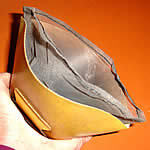
of the month: in place of the paper
coffee filter
Up until Mexico and Central
America, we had no problems finding inexpensive
unbleached paper filters for our ortlieb
coffee holder. From then on in, it was not
only difficult sourcing them, but when we
did come across them they were bleached
and we had to fork out an arm and a leg
for a months supply. It was time to figure
out an alternative.
With some no-see-um (sand-fly)
netting left over from tent repairs and
using the same measurements as a No 4 cup
filter, I sewed together this little addition
to our kitchen. As well as weighing and
costing us next to nothing, it cleans easily
with a good shake and a bit of water. Furthermore,
it is way more environmentally friendly.
Las Cabinas Internet
Café
[website]
,
Medellín, Columbia,
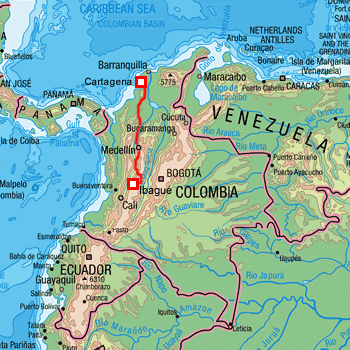
22-07-09 Cartagena to Medellín (11 cycle days;
3 rest days; 670km;7595m) Cartagena to San Juan Nepomuceno (88km; 667m)
San Juan Nepomuceno to El Carmen de Bolivar (32km; 366m)
El Carmen de Bolivar to Sincelejo (70km; 639m)
Sincelejo to Sahagun (51km; 264m)
Sahagun to Planeta Rica (72km; 599m)
Planeta Rica to Caucasia (67km; 301m)
Caucasia to Tarazá (64km; 394m)
Tarazá to Valdivia (62km; 1101m)
Valdivia to Yarumal (38km; 1513m)
Yarumal to Santa Rosa de Osos (51km; 1016m)
Santa Rosa de Osos to Medellín (76km; 735m)
Comfortable Cartagena
Our first impressions of Colombia are based entirely
on what we experience during our week long stay in Cartagena.
Street life is incredibly bustling. Book salesmen, watchmakers,
jewellers and fruit and vegetable merchants collectively
huddle in little roadside booths or snooze under the
shade of their canopied trolleys. Cooling lemonade or
tamarillo juice vendors are found in every street as
is the tinto (coffee) man. A small cup costs 500 pesos
(25 US dollar cents) There is even a spot where you
can find every possible working part for the common
household blender, which kind of indicates how big Colombians
are on their liquidized fruit drinks. Peddlers of all
things touristy wander up and down begging you to buy
their gaudy souvenirs.
On Sunday though, the streets quieten
down: small business is shut and only a few die-hard
street vendors remain. The Exito supermarket chain and
the over-priced boutique stores in the old town however,
remain open. Money changers renowned for their slight
of hand are always at work: looking for some poor unsuspecting
tourist. They are known quite aptly as Money Magicians,
so even with the wonderful exchange rate they are
bound to offer you, it is not worth your while to change
money with them.
The old town is architecturally sculptured
with the colour and grandeur of Spanish colonial times
and a great spot to wander around. It is a complete
surprise exactly how up-market the place is and even
though we can't afford to, it appears that there are
enough Colombian tourists to fill up the trendy cafes
and restaurants offering a medium pizza for nothing
less than US$25. That's getting close to double the
price of our nightly accommodation. It is a much cheaper
option to eat out near where all the hostels are. Though
the choice is limited and as far as food is concerned,
pretty average, a typical serving will set you back
between US$3 and US$6.
If it wasn't already there, Al Palcino's
performance in the movie Scarface epitomised the infamous
cocaine association with Colombia. And the rumours that
you can obtain it easily and cheaply are true. Just
look slightly like you are out to enjoy yourself for
the night and you'll more than likely get offered to
purchase a gram. While the drug maybe cheap, stepping
out anywhere in Cartagena is an expensive exercise.
That is, unless you decide to do as most of the locals
do and head to one of the plazas.
Mexicans are also a big fan of this
activity and we certainly missed this cultural element
in Central America; where everything shuts and people
retreat behind closed doors a little after darkness
descends. Plazas are great places to just while away
the hours and people watch. Conveniently, there is usually
a shop close at hand which acts more or less like a
fully stocked bar with really affordable prices. Drinking
in public is not frowned upon at all and so the store
even issues you with little plastic cups. Food carts
do a roaring trade as well and while you are waiting
for your order to be prepared, local teenagers will
entertain you with a multitude of football games. The
family orientated vibe can only be described as comfortable.
A bit rough around the
edges
Expecting sore bottoms by the end of the
day, we set off on a Sunday to relatively quiet roads.
They are not at all well paved, but then again, not
the worst we have experienced either. As soon as you
cross the bridge leaving the old town way behind, the
scene is rough and ready. Apart from all the freshly
placed flowers on a local graveyard, it is not at all
pleasing to the eye: more akin to slums and a striking
contrast to the posh colonial demeanour of the tourist
city.
The first 50 kilometres sees us steaming
ahead. We are blessed with overcast skies and relatively
flat terrain which helps our progress through the rich
green but very poor countryside. Still, the underprivileged
lifestyle doesn't stop a man from salsa dancing at 9am
in the middle of a petrol station, nor a young boy from
smiling as I hand over 1000 pesos for a couple of corn
fritters. Normally, we don't buy from street hawkers,
unless they are cooking the product in front of us and
an hour down the track, I really wish I hadn't diverged
from this habit this time either.
But before I tell you how the cramps
have me doubled over and make the last 25 kilometres
of the trip a living nightmare, I have to touch on a
subject I haven't talked about for a while: birds. These
airborne animals are with us everyday, no matter where
we are on this planet and probably the single biggest
eye-opener of our trip so far. While I don't think I'll
ever become a bird-watcher, I can understand the intrigue
these people have for them.
The area we are pedalling through has
expanses of swampland covered with water lilies, rushes
and other grasses which means our feathered friends
are out in full force. Today the varieties include a
multitude of herons, hawks; parrots; and a little blackbird
with a canary coloured head which I imagine wouldn't
help much on the camouflage front; all twittering and
chattering and performing aeronautical stunts in front
of us, though none so spectacular as the ability of
the geese, the size of fighter jets, to launch themselves
in mid-air. I can see the French farmer rubbing his
hands with glee at the sight of these oversized beauties.
I'm feeling dehydrated, dizzy and
pretty sick as the terrain gets hillier for the last
few kilometres heading into San Juan Nepomuceno
(88km; 667m). At the start of the the
town, Hospedaje Virgen del Carmen next door to Hospedaje
Clamy's: both painted in psychedelic colours
and obviously by the same signwriter, offers an air
conditioned room with private bath and cable tv for
20,000 COP (about $US10).
This seems like a pretty good deal,
until we have accepted the room and paid, only to find
out that there is no electricity except for the extension
cord leading from an outside source to the air conditioner.
This cooling system seems to be the owners pride and
joy and as far as they are concerned we should be able
to survive in the dark as long as we are cool and if
we want television, then we can come out to the restaurant
and watch it there. I'm having nothing of it and they
eventually rig us up another extension cord running
from a generator outside for the television. We still
don't have a light, but the brightness of the television
will suffice for the evening. A few hours later, more
guests move in and miraculously electricity is restored
to the hotel section of the building. Certainly makes
you wonder?
Nothing in me
The evening and the next day are filled with impromptu
toilet visits, until there is nothing left inside of
me. I'm feeling incredibly weak, hungry and I can hardly
make it to the top of each small incline today. The
sun doesn't help matters, neither does our late departure
at 9.30am, but I was feeling pretty bad when I woke
up this morning, so we slept in a little longer than
normal. I really should have stayed put, but there was
no way I wanted to stay in the little box for another
night. Somehow, with encouragement from Ali, I manage
to crawl into El Carmen de Bolivar (32km;
366m).
We take the first hotel we see. Although
30,000 COP is a little on the steep side for a room
with a fan, it is impeccably clean with modern amenities.
The cheerful staff, with their big smiles and big stories
babbled in Spanish at a million miles per hour (as if
we understand every word they say), also add to the
pleasant atmosphere. The fan doesn't really live up
to its job in the cement space and we move to an air
conditioned room the following day. It costs 40,000
COP. I spend two full days in bed recuperating
and just as I'm able to eat normally again, Ali comes
down with the same thing. Ciprofloxacin comes in handy
once again.
Playing games
Every evening in El Carmen de Bolivar we have heard
fireworks, music and witnessed yet another imaginative
game with a football. This time though the ball is made
out of coconut fibre, soaked in petrol and set alight.
As you would expect, the boys get to kick the thing
around the streets, while groups of girls (of all ages
mind you), run screaming into doorways for protection
every time the ball comes into sight. It is pretty entertaining
to observe. However, I am a little bewildered at how
the females can occupy themselves for so long by simply
standing on the walkway, waiting for the activity to
come their way and then when it does, run terrified
into a building. This is clearly a male orientated game.
We watch for a while, before retreating
ourselves behind the doors of a local pool hall. We
are shown to the only spare table. It is on a slant.
The green cloth is old and worn and covered in white
chalk dust used to reduce the sweat on your hands. We
are offered to order a beer. Six varieties are advertised
on the faded yellow banner nailed to the cement wall,
but only two are available: Aquila and Aquila light.
Two full strength beers are placed in the wooden tray
near our table and a number two is written in chalk
on the door opposite us. It is changed to a four half
and hour later, when we order two more.
Ali shoots and the white ball is perfect
for his next shot. At least for a moment and then it
does an unlikely dance move, doubles back on itself
and drifts into an impossible shooting position. He
is unfairly snookered, but it is worth laughing about.
His attempt at a double fails. The corner of the room
is motley and crumbling and a pungent wet nappy odour
seeps from the concrete. I have no other option but
to stand there breathing it in since a hoard of screaming
females have taken over the other side of our pool table.
A flash of light passes the doorway as the burning football
flies down the street. An even bigger mob of guys runs
after it. More girly squealing before the group drifts
back onto the footpath. I now have room to shoot the
ball. I pot it. Passersby stop to stare. I pot another.
And another. The crowd gets bigger. This is clearly
a male orientated game. I miss.
Carga larga y ancha
[long and wide load]
Only a few days on the road in Colombia and we feel
incredibly at home. While the highway is in poor condition
and not as cycle-friendly as other cyclists blogs have
made out, people have openly welcomed us with big thumbs
up or enthusiastic waves all the way from Cartagena
to Sincelejo. Potholes even have the trucks
and buses zigzagging across the bitumen. There is definitely
way too much heavy vehicle traffic along this stretch
of road and often no or little shoulder to use. In the
drivers' defense though, they do try and give you space
when overtaking with their long, wide loads.
A little more than 12 kilometres before
our destination and we find out exactly how long a cheap
$5.00 derailleur lasts: about 2 days of cycling. Mind
you, the problem lay more with the fact that the bracket
had worked itself loose and spun around on the frame
warping the derailleur cage when I tried to change up
onto the heaviest gear. We bend it back so I can reach
enough gears on my middle crank to get me into Sincelejo
(70km; 639m). I am very thankful that
the gradients are reasonable today.
From the last couple of days, it appears
that accommodation prospects are scattered all over
Colombia. Even the small villages have at least one
hospedaje. Being quite a decent sized city, Sincelejo
is no exception and has numerous places to choose from.
It also has a couple of large supermarkets for stocking
up on essentials. We find a small room at Hostel Cattleya
for 22,000 COP. The building has seen better times and
the roof of our room doesn't actually meet the side
wall, leaving a gap where the outside has started growing
inside. Keeps the air fresh in the room at least.
Talk about customer service
After hunting around town for a half decent derailleur,
we finally find something suitable. It's another cheap
end of the range Shimano component, but sturdier looking
than the last one. While there are some pretty nice
looking bikes riding around, finding parts of any calibre
is proving difficult. Customer service on the other
hand is of the highest standard and not only does the
bike mechanic put it on, but he scrubs my bike until
it is gleaming. While all this is happening we are pleasantly
treated to glasses of icy cold aguapanela
[sweet homemade Colombian lemonade] and a chat with
an even more pleasant shop owner.
The afternoon is ticking by fast and
by the time I have come back from shopping at Exito,
hunger has really set in. I had spent a little longer
in the shop than expected as my docket had a few discrepancies
on it. I always check before leaving the supermarket
and my cashier saw me in the corner rummaging through
the bags trying to work out why I had paid so much.
He came over, without me asking mind you; and enquired
as to what the problem was. I showed him the items on
my register slip that I hadn't actually bought; he went
immediately to the manager; came straight back and apologised
profusely that he would need to put everything back
through the scanner. He smiled through the whole process;
was calm; and apologised again as he passed me my grocery
bags and refunded the money owing. I don't think I have
ever had a more agreeable experience in a supermarket
in my entire life.
Earlier on in the day, the owner of
our hotel recommended we go to his brother's restaurant
around the corner for our evening meal. Although the
choice in the traditional Colombian menu is limited
for a vegetarian, it is late and I don't have any desire
to cook tonight. Besides, it is worth receiving the
big handshake when we walk inside and the genuine patience
as we explain our eating preferences. The food is delicious,
the service attentive and just the fact that his brother
had obviously mentioned that we were coming made it
all that more special.
True Colombian
Like everywhere else in Central and South America, Colombians
boast that their food is better than their neighbours.
Basically, all these countries have exactly the same
food with a few minor variations and local specialties.
The Comida Tipica [typical meal], or Bandeja
Corrientes [normal tray] on offer in most restaurants,
consists of a plate of rice, patacones [fried platano],
an egg, a piece of meat, and a small portion of sweet
vinegar coleslaw, accompanied by a bowl of beans or
lentils. As vegetarians, we can eat everything except
the meat and more often than not the bean element, since
they are cooked with pork.
The biggest difference in Colombia
is the bakery produce. They actually know how to bake
a croissant and a baguette here. Though not quite up
with French standards, they even call them croissants
and baguettes. Still, they are a marked improvement
on the dry tasteless bread and pastries found in Central
America. The only catch is, some outlets sell products
that are several days old. Finding something fresh generally
means purchasing direct from the trays that have just
come out of the oven. Besides the baker's influence,
there is also an overwhelming number of Renault 12TS's
on the road, which makes me wonder how the dickens the
French managed to have such an infiltration on Colombian
culture?
Taking it real easy
On the way out of town this morning we meet Vincent,
another cyclist travelling in the opposite direction.
By the time we get back on the bikes after a coffee
and chat, it is 10.30am. Luckily the terrain is easy
and in great condition. Unfortunately, it is stinking
hot, but images of grassy pastured farmland dotted with
grazing white brahman cows and dams reflecting palms
and all things lush and green, have a somewhat cooling
effect. Besides, we have decided just to amble along
the 50 kilometre journey today and that is exactly what
we do: stopping frequently to rest and take in the relaxed
atmosphere.
Colombia also paints a true artisan
impression. For a start, the roof thatching is the most
immaculate I have ever seen anywhere in the world and
along the way, people are painting or crafting something.
Each town has its own theme: the first we cycle through
today, Sampués, is inundated with woodwork shops
selling beautifully carved furniture and decorations.
Just down the road in Chinu, they design and retail
leather sandals and shoes. There are footwear shops
lining both sides of the street and it is obvious, as
we reach our destination of Sahagun (51km;
264m), that we have selected to stay overnight
in the town renowned for partying. Bar after bar compete
with beer prices and sound machines that send a thumping
vibration through your chest bone. Now, it has to be
said that there is a definite art in revelry too.
Sahagun's cheap accommodation is not
at all up to standard, mostly tiny cement blocks just
big enough for a double bed, with no window, so we fork
out double the price (30,000 COP) to stay in the only
up-market hotel that we know of. Still a little pokey,
but tastefully decorated with the bonus of a couple
of windows.
Another boring write-up?
Once again the scenery is beautiful, green
and countryside is clean; roads are brilliant, terrain
is a little up and down, though nothing too difficult.
The only complaint would be that the traffic is a bit
heavy for a Sunday and our dinner at our roadside hospedaje-come-restaurant
in Planeta Rica (72km; 599m)
cost 20,000 COP which is almost as much as our room.
The following couple of days are also
pretty similar. Still plenty of green pastures filled
with grazing cows of all shapes and colours. Makes for
a boring write-up really. Well, except to inform you
that these animals would have to be the silliest creatures
alive. They are not at all phased when a double-semi
scrapes past, centimetres from their masticating faces
at 100 kilometres per hour. They just raise their heads
briefly; batter those long lashes; and continue chewing.
And then we, in all our insignificance, come cycling
along. Before running as far away from us as possible,
they drop their cud, do a freaky little wobble followed
by a kick of the hooves, all of which makes me think
that maybe they recognise in us the local butcher in
the middle of a slaughterhouse selection process. If
only we could tell them: we are vegetarians.
Gangly branches of giant marmone trees
reach across the road on both sides, keeping us shaded
from the harsh sun. We stop under one to eat a pineapple
I had bought from a roadside fruit farmer at the start
of our journey. The end of our trip sees us cycling
into Caucasia (67km; 301m) a
moderately sized town with a massive Exito store. The
owner of the first hotel we try won't let us take the
bikes inside, which is the second time we have come
across this in our travels and both instances have occurred
in Colombia. The lady at Hotel El Remanso has a totally
different attitude and we and our bikes are more than
welcome.
There's no problem the next day either
at the petrol station on the other side of Tarazá
(64km; 394m) where we even get help to
carry the bikes up the stairs. Also moderate in size,
there are plenty of other accommodation options in town,
but they all have the ambience of a concrete jail-cell.
As far as we are concerned these days, no window means
no stay. Ali checks out a couple in town while I become
absorbed in the street life. So much is happening at
once, it's entertainment in its purest form: one man
is lugging a 1980's television up the hill on his shoulder;
a couple of motorcycles have screeched to a halt as
another has just pushed a refrigerator-laden trolley
in front of them and into a side street; school children
in uniform wander both sides of the street; and the
raspados man has got several of them crammed round his
antiquated ice-shaving device. He puts one block on
and turns and then another. Little plastic cups are
packed with rasped ice and bright pink and yellow syrup
liberally poured over. Looks pretty inviting. It is
a very hot afternoon.
Back at the petrol station we are impressed
with our accommodation We have seen quite a number of
these along the way, but they looked a bit up-market
for us. On the contrary, they turn out to be really
good value. A room generally goes for anything between
15,000 and 20,000 COP per night. They are clean and
with good bathroom facilities and include a fan and
cable tv.
The hills are alive
The first kilometres are easy and rolling.
After eleven clicks, we strike the first roadside water
jets. Waterfalls rush from every available crevice and
locals have tapped into the life of these mountains
with cunning. The natural force allows them to have
permanently running water in their homes and roadside
lavanderias (washing areas). Business, in the form of
truck and vehicle cleaning bays, have emerged in every
village and the hoses here shoot giant jets high into
sky. At lunchtime and our 42 kilometre mark we hit Puerto
Valdivia . From now on in, we are aware that the journey
is basically uphill all the way to Santa Rosa. What
we hadn't reckoned on, were the gradients. The next
19 kilometres traverses 886 altimetres straight up with
no breaks. It's also a mighty busy road, but luckily
the trucks are fairly passive and weave a wide path
around us considering the windiness of the route. It
is hot climbing and more than once I find myself wishing
that the sun would go behind the clouds.
We reach Valdivia (62km;
1101m) quite sweaty, late in the afternoon
and along with all the other truckers, stay at the petrol
station on the outskirts of town. The mountain views
are breathtaking from this vantage point and the food
in the restaurant next door just as nourishing.
Non-stop granny gear day
More climbing today and a few kilometres
from Valdivia we can see the pass. It doesn't look far
away; maybe 5 kilometres or so. But when we overtake
a group of young boys on foot and tell them we are travelling
to Medellín by bike, the terrified looks on their
faces, spell a difficult journey. Their fear turns to
delight when I give them a bag of croissants filled
with ham and cheese that I mistakenly purchased from
the bakers yesterday.
The pass is exactly 15.5 kilometres
away from Valdivia. It is an average climb of 6% with
a couple of maximums of 17%: one being a little too
long for me to keep the pedals going round, so I get
off and push. Superman just rises in the saddle and
moves on by. Reaching the 2015m pass takes 4 hours with
lots of breaks, but the military boys at the top are
more than impressed with our efforts.
The rest of the journey continues to
take us up and down several steep inclines and reaching
another maximum of 2139m at one stage. While it might
be almost a non-stop granny-gear day, it is absolutely
stunning countryside and coupled with a warm sun and
cool breeze, you couldn't want for a better cycling
combination. It's fresh, green and velvety and it feels
great. There is one grand final climb to a little over
2400m before an encore drop into the surprising large
city of Yarumal (38km; 1513m).
After all the rural villages enroute with their plastic
houses, who would have expected such a metropolis up
here in the clouds.
Up there in the clouds
In hindsight, we should have stayed an
extra day in Yarumal. Our hotel is a little more expensive
at 32,000 COP, but that is to be expected when you stay
around the central plaza in a town. It is a great room
though, with piping hot water and a wifi connection
as well. Everything at our fingertips including a well
stocked supermarket downstairs and an entertaining plaza
view from the hotel balcony.
Before we have the bikes packed, a
crowd has formed around us. One military guard can't
contain his curiosity as to how heavy my bike is. ¿Quanta
pesas?, he says as he tries to lift my bike. "Ooooohhh,
mucho, mucho!" he exclaims as he barely gets
it off the ground. He is definitely impressed and tells
everyone about it. Our conversations are so simple,
yet they still manage to bring a smile to everyone's
face. It reminds me of the time in Thailand when we
were trying to explain something to a hotel owner with
the use of a dictionary. Neither side of the conversation
was getting anywhere, so Ali just opened up the book
and read out the first funny phrase that caught his
eye. It said: "Would you like this dance with
me?" and miraculously enough, the guy immediately
understood and thought it was hilarious. We all did.
Like the Thai people, Colombians love to interact with
you: find out about what you are doing; where you are
going; and where you came from. Once the conversation
gets started, you just can't stop them. Well, we have
to at some point, because our Spanish is not that good.
Time to stop somewhere for a week for a quick course.
The first drop is exhilarating: double
switchbacks through green meadows lit by early morning
sun; tamarillo trees like stiff green-painted cotton
wool balls neatly dot the landscape. It is then, more
or less a continual climb to the town of Llanos
del Cuiva at 2721m, where the kilometre
marker reads "00". We had been wondering what
this place was since the start of the climb a few days
ago: not mentioned on our map and still 23 kilometres
away from Santa Rosa. Our plan to push for Medellín
today is cancelled when we see the up and down nature
of the rest of the journey. After an initial climb into
Santa Rosa de Osos (51km; 1016m)
and finding out that the hotels in town are way to plush
for us, we drop back to the highway petrol station.
We spend the night in a holiday-like cabin made entirely
of wooden panelling. The beds have 4 blankets on them,
which gives you an indication of how cold it can get
here. Such a contrast to the lowlands.
Give me the mountains any
day
The ride from Santa Rosa to Medellín
is not one big downhill as people will have you believe.
It is up and down all the way and a couple of the inclines
are just as energy zapping as recent days. The mountain
views, on the other hand are breathtaking. Well at least
until you have finished the longest descent of the day
taking you 14 kilometres down all the way to 1400 altimetres.
We need to stop twice to cool our brakes and rims down.
At this point, there is still 32 kilometres left to
ride before we reach Medellín and it is not only
rolling and stinking hot, but quite unattractive. Even
though the six-lane highway is not that busy, I still
can't help thinking that you can give me the mountains
any day. A bike lane runs on our right, but we renege
using it due to it inconveniently stopping dead or turning
into a rubble path.
As with all big cities, it gets extremely
busy on the outskirts and a little chaotic trying to
find our way into the city. One plus is that traffic
is used to cyclists and we even have a wide path to
use for much of the way. The views of slums and rows
and rows of terra-cotta bricked housing stacked on top
of one another is nothing short of spectacular; but
only in the sense of just how many people can fit into
such a small spot. Navigating the centre is not as difficult
as Ali thought and neither is the price of accommodation
as expensive as we expected. Popular guidebooks advertise
private doubles at hostels with share bathrooms for
more than 50,000 COP. We opt to just find a local hotel
in the heart of Medellín (76km; 735m)
and we not only succeed with the central location, but
also with price. Just 24,000 COP per night for a really
nice room in the friendly-run Mageba Hotel. A few days
rest and another big city experience before we hit the
mountains once again.
Internet Café,
Ibagué, Colombia, 02-08-09 Medellín
to Ibagué (7 cycle days; 2 rest days;
437km; 7699m)
Medellín to La Pintada / El
Crucero (82km; 1273m)
La Pintada / El Crucero to Irrá (64km; 581m)
Irrá to Manizales *estimated (56km; 1700m)
Manizales to Nevado del Ruiz NP (39km; 1786m)
Nevado del Ruiz NP to Murillo (49km; 731m)
Murillo to Venadillo (88km; 604m)
Venadillo to Ibagué (60km; 1024m)
Worlds apart
Cartegena is a posh yuppy city compared to the underworld
texture of Medellín. The city centre smells.
No, it reeks: of urine and exhaust; of furniture shelac
and cheap perfume; of grilled arepas and marijuana.
It is alive with homeless: way too many and many too
young. A commotion of street vendors stockpile the streets:
packaged snack foods hang from shopping carts with ordinary
clothes pegs; colour coded coffee flasks are wheeled
up and down the square by wrinkled folk in custom-converted
prams; cells phones dangle from strings attached to
the vests of merchants selling phone minutes; fruit
traders push wheelbarrows yelling the products name
over and over again; and the poor hand out chiclets
waiting dejectedly for a donation. Seems everyone is
selling something.
And that includes the young girls in
the back streets near our hotel, solely dedicated to
showing more crotch than I have ever seen on public
exhibit in my life. Why someone hasn't told them that
lycra miniskirts two sizes too small are not the most
flattering outfit for someone offering their overweight
thighs as a service, is slightly bewildering. Anyway
up and down they nonchalantly parade, hitching their
skirts up and down, depending on who is walking up and
down and whether they are perusing them up and down
with the notion of a possible bit of up and down.
We are seen off from Mageba Hotel with
a kiss from the owner and well wishes from the men and
women standing on the corner, who we have never seen
before. Getting out of Medellín is difficult.
Three lanes on both sides of the road are roaring full
with vehicles and the side exits make it difficult to
stay en route. But the hardest part of all is inhaling
the exhaust fumes. They burn and constrict our chests
making the relatively flat escape from the city an uncomfortable
cycle. Both feeling pretty sick, we are relieved to
take the left fork in the road after 15 kilometres,
hoping that we will weave our course away from all this
heavy duty traffic.
The fact that we have to ascend takes
us into much fresher air and we can once again breath
normally. There is now only one lane of almost constant
traffic, which certainly beats three. Somewhere around
the 30 kilometre mark out of Medellín, the number
of vehicles has died down a little, but this main highway
is way too small for the magnitude of trucks that use
it. A diabolical shoulder means we have to share their
space too. A couple of short ups and corresponding descends
are followed by one long hard climb to the Alto
de Minas [top of the mines] at 2475m. The
scenery is stunning: massive mountains like we haven't
seen since Nepal, only these are tightly tiered from
the valley floor up with palms, ferns, red gums, fruit
trees, vines and silky soft grass: every jungle green,
every forest green, and every paddock green combined
and then studded with the occasional farm house and
plenty of cows, horses and donkeys.
Lucky, lucky, lucky
We had planned to stay in Santa Barbara, but we arrive
early enough to continue the next 25 kilometres to the
nearest town on the valley floor. While it is not likely
that the entire journey is one big drop, it should be
relatively downhill for most of the way. But before
we get a chance to heat our wheel-rims up, Ali gets
a flat in his front tyre while powering past a petrol
tanker. He is so very lucky that the vehicle is only
crawling along; which is why he was overtaking in the
first place. Nonetheless, as I start to go around the
now almost stopped tanker, I see Ali picking himself
up off the bitumen like a lightning flash and dragging
his bike like a feather across to the opposite curb.
He is in shock and hurting; I can tell by the facial
contortions and the couple of very nasty grazes on his
left elbow and knee. Luckily, they are clean wounds
and don't take much first aid.
Somehow, his Presto valve has ripped
itself almost completely off, which resulted in the
sudden tyre deflation and the inability to control the
bike. After a half hour or so, we take off again. Not
even a kilometre down the road and Ali gets another
flat and instead of meeting with the bitumen this time
he ploughs into the grass bank on his right. On this
occasion though, I am up front and spend several minutes
waiting a kilometre below before having to cycle back
up the hill to see what is wrong. Not the valve but
a bad patch job is the cause: probably from Central
America, where it was difficult in humid conditions
to get the glue to work effectively. But you know, these
sorts of problems come in threes and a couple of hours
further on down the same thing occurs.
A subsequent valve problem, which makes
me initially think something is slicing into the tube
on Ali's rim. I also think it could possibly be the
new tyre he has bought, but we sand down the valve hole,
put in a new tube and set off yet again. Roughly a week
later and we discover another small hole in the valve
and decide that it definitely has to do with the recently
purchased Bontrager tyre. We also both agree that it
is more likely due to its weak walls, which causes the
tyre to move around too much, bending the tube valve
with it and eventually breaking it clean off. Whatever
the case may be, the whole incident has definitely reduced
Ali's speed on the downhill runs.
As well as stopping to rest Ali's hand
and cool our brakes, we stop for some freshly squeezed
juice. This section of the road is full of Jugo
Naturales stalls and plenty of smiles from locals,
either trotting their horse up the wrong side of the
road or sitting on their terraces enjoying the late
afternoon sun. Jungle forest turns into farmland the
further we descend. The temperature rises considerably
as well. La Pintada / El Crucero (81km;1723m)
is divided into the tourist section, which we hit first
and then the actual town, just over the bridge. It is
a happening little place and we head straight to the
petrol station and 19,000 COP gets us a tiny but clean
room with fan, tv and private bathroom.
With the sound of music
Ali needs an extra days rest and time to get his wrist
looked at by a doctor. The other wounds are healing
well and when we hit the road the following day he is
pretty elated about just being able to cycle. We chase
a red silty river snaking its way along the valley floor
while traversing up and down the road etched in the
cliff wall. The massive mountain range way out in front
means we'll have to climb sooner or later, but for the
moment we just glide along past village houses. Familiar
tunes sung in Spanish about love and happiness blare
from cheap speakers perched on wooden tables on the
front verandah.
It is almost like cycling in between
a couple of giant bowls of spoon heaped icecream, lusciously
covered with velvety grass topping, tree-top sprinkles
and a few giant palms for decorative umbrellas. The
road is smooth until Mamato, but even after that the
ride remains easy; which by the way, means tomorrow
is going to be a killer. La Felisa is a decent sized
town at the highway toll gate and the sugar cane fields
surrounding reflect the number of stalls selling
jugo de cana [sugar cane juice]; panela
[solid blocks of brown sugar]; and dulce de leche
[caramel spread] or arequipe as they call it
in Colombia. There are also plenty of other sugary sweets
to choose from too. At the end of town turnoff, it is
19 kilometres to our destination and just 6 kilometres
before we meet with a very dark tunnel covering a potholed
surface. It is very short, luckily. Not so fortunate,
is the unwelcome greeting from the first hotel we try
in Irrá (64km; 581m),
but the petrol station next door has one of the cheapest
rooms in Colombia. Eleven thousand peso's gets us a
very small but newly renovated cement box.
What a day!
Sunday is still a busy road day as far as trucks are
concerned. And there is no messing around at the local
bars either. Judging by the tables laden with empty
beer bottles as we leave Irrá at 8am, there are
plenty of customers getting a head start at cooling
the palate. For us we have to make do with the shade
from the highway trees. The road goes up as much as
it goes down which is a worrying thought seeing as we
need to rise well over 2000 metres.
By 12 midday, we have traversed more
than 700 altimetres and still only at around an altitude
of 1300 metres. From the turnoff to Manizales, the road
basically continues to elevate for the rest of our journey.
We push a slow path up the mountain, along with many
other cyclists on a sweaty Sunday work-out. One surprising
downhill somewhere in the midst of all that grinding
is actually unwanted, considering our goal.
The winding road becomes a real strain
for me for the last two hundred metres of climbing.
I have to stop regularly and I'm not the only one either.
Other cyclists on light frames and no luggage are continually
pausing for a pick-me-up drink or just to rest the aching
legs. Ali doesn't like cycling like this. He prefers
to keep moving for as long as possible. Neither do I
for that matter, but after already pedalling 1500 altimetres,
I have little choice: my legs are totally zapped.
Even when we come to the sign, welcoming
us to Manizales, the road doesn't stop ascending. In
fact, the last section is probably the most gruelling
of all. The couple of kilometres of thigh crunching
finally comes to an end as we peak a few streets back
from the main plaza of Manizales *estimated
(56km; 1700m). The first couple of hotels
are little hovels and not where I feel like spending
a couple nights after such an intense day. We return
to the outskirts and find out that the accommodation
there is all around the 70,000 COP mark, so there is
no other choice but to make our way back to the plaza.
Hotel Camelot just happens to be in one of the side
streets we stumble down and for the discounted price
of 40,000 COP we can have a massively comfortable room
with hot water right in the heart of the city.
Did I say, "What a
Day"?
Ali has his bags lined up on the steps inside the hotel
entrance while I am unpacking my bike outside. A tramp
whizzes inside and offers to help us with our baggage.
Ali says "No" and then disappears upstairs
with a load. The homeless guy persists. I tell him "No",
but he doesn't let up. I say "No" again and
again until he picks up a pile of bags and drops stuff
everywhere. This time I scream, "No" at him
loud enough to have street onlookers, the owner and
Ali come running over to the steps. Ali chastises me
for yelling at the guy, but I don't trust him one bit.
The street-dweller pretends to be offended and acts
as though his intentions were honorable. But we soon
find out that they were about as genuinely sweet as
my stinking riding socks.
In the room, our conversation had quickly
switched from me being horrible to the tramp, to the
day's ride and Ali not wanting to traverse the mountains
in Nevado del Ruiz National Park, if I can't
pull out a 2000 altimetre climb in one day. I really
want to go there, but I can't do that sort of climbing
in one day anymore. Today was a perfect example. It
is way too much effort and I don't see why we can't
split the trip into two riding days. Especially at an
altitude of 4000m. Ali doesn't want that and it now
seems camping near a farmers home is also out of the
question.
Sensing that the conversation is going
round in circles, I decide to do something useful and
check out the Chinese restaurant next door, which, as
far as a vegetarian is concerned, turns out to be a
waste of time too. Chinese food in Colombia is not the
typical Chinese food we are used to. At the foot of
the stairs, I find Ali hunting for his VDO bike computer.
That lovely, genuine, little sod had stolen it out of
top of Ali's handlebar bag. Ali is fuming and rightly
so. First of all it is no good to anyone without the
transmitter, and secondly it is going to be a real hassle
to get a replacement to this neck of the woods.
While we are planning this strategy
over a beer in the local bar on the corner, our darling
thief has worked out that his illegal acquisition is
totally useless to him and is back at the hotel negotiating
a buy-back price with the owner. Hard as it is to comprehend,
this is the way things operate in Latin America. Ali
ends up buying his own bike computer back for the laughable
sum of 5,000 COP ($US 2.50), but he is more than happy
to have it returned after a no longer than two hour
absence.
We decide to hunt for a pizzeria, but
pizza is generally sold by the slice in Colombia and
you'll be hard pressed to find a vegetarian option anywhere.
During our search we meet up with a street poet: the
type of poet you tell your name to and he'll write a
poem for you. He insists on taking us all over the city
to try and find something vegetarian before we finally
come to rest at a Chinese restaurant with reasonable
prices. We order food from the waiter and a poem from
our friend. We end up with both quite quickly, but neither
tasks require too much effort. Somehow a take-away portion
of our meal ends up on the table as well. How that came
about, we have no idea, but there are plenty of vegetables
and we are hungry enough to demolish the lot.
Manizales is busy everywhere. You can't
walk a straight line down any of the main streets. I'm
not sure what everyone is doing here, but I'm on my
way to find some croissants without ham in them. The
ones I bought last night, which I specifically asked
twice for "sin jamon", had little
pieces of pig in them. Pleased a local homeless guy
though when I handed him a big bag of pastries for his
breakfast. Later in the day, Ali checks out the route
to the volcano and prices of accommodation or camping
prospects. He also finds a decent bike shop to buy a
few more tubes. Going into the National Park itself,
is way over our budget. For one night, including entrance
fees, it would cost $US 60 to pitch the tent and we'd
have the added hassle of having to book a guide. Stocked
up with supplies, we are ready to head into the mountains
and see what comes of it.
Bar Cosmos
That famous black and white Marilyn Monroe
print and another of Laurel and Hardy decorate two of
the smoke tinted walls. A menu hangs in between while
a carved wooden bullfight plaque covers the entire surface
adjacent to the bar. Stained in hues of brown and bringing
the scene to more life than the barman leaning low on
the service counter, the craftsman shows a deep passion
for his subject. Way more enthusiasm even than the bar
service lady gives us when we enter. We move to the
opposite side of the carving and sit on a couple of
1970's blue vinyl and chrome kitchenette chairs. Music
from 50's crooners with a sporadic burst of tango gets
a local drunk up and swerving a dance between the furniture.
He really should have abstained from the last leg kick.
Finally, a couple of beers come to our table and in
the low light we sit and watch.
David Lynch would love this dim set:
For an hour we are confronted by salesmen of all calibre.
Little boxes of chiclets chewing gum come first from
guys with wooden trays strapped to their bodies and
brimming with brightly packaged snacks. A shabby lad
flies enthusiastically around to every table leaving
behind a single candy per person. He returns after his
first round in hope of a donation, but he is not very
successful in Bar Cosmos tonight and departs with all
his sweets accounted for. A painting recently snatched
from another establishment's wall comes next into the
selling ring, followed a man with hotdogs and a rather
delicious smelling Colombian style piccalillli chutney.
The replica landscape photos aren't particularly good
and we can hardly see use for the oversized fluorescent
tube some other trader is offering us. Two shoeshine
merchants try their luck and the colouring book peddler
is adamant that we really need some of his merchandise.
We can also have a car wash, a steering wheel cover
or even a bible, but all we really want is the attention
of the barmaid at Bar Cosmos so we can order a couple
more beers.
"Muy Valiante"
[Very Brave]
We push against traffic and a few hills trying
to get out of Manizales. It is a massive city and the
sprawl goes on for several kilometres. On the outskirts
we drop 120 altimetres in one foul but delicious swoop
and then the true climbing really begins. Road marker
reads "0" at the start of the 5005 Highway.
It's quite hot initially, reaching
39° Celsius in the sun, but as the day progresses
and we ascend a cool breeze joins us for the ride. By
the end of the day, it has turned into a cold bitter
wind. The road is decent enough, though the shoulder
intermittently disappears or disintegrates. Even so,
the traffic is minimal and friendly. Roadworkers are
amazed as we pass by and one man quite overwhelmed at
me pushing the kilograms up the mountain shouts emotionally
with his clenched fist punching the air, "Muy
Valiante; Muy Valiante".
It is a wonderful change to be on a
peaceful road. There is only the faint sound of the
industrial grind from the town before road marker "5";
the odd truck battling like us up the steep gradients;
and my heavy but steady breathing. Giant white butterflies
with iridescent blue undersides flutter past like a
silently flicking neon light. Vermillion bodied dragonflies
hover in my ascent path and then dart way out front.
They teasingly return as if to show me how much easier
it is to fly than pedal the journey.
We reach La Margarita (3190m)
by early afternoon; after climbing a total of 1191 altimetres.
The beauty of the isolated mountain landscape has been
worth every pedal. I put on some music to help with
my climbing rhythm for the next 240 odd altimetres leading
us to the National Park turnoff at La Esperanza
(3432m). It is an agonising ride after this point.
The road might be paved, but it still dishes up sections
with a 7-8% incline; my legs are tired; my breathing
laboured and my head slightly dizzy as we approach the
3500 altimetre mark. I regularly get off and push.
We pass through a rain cloud, but it
drops less water than my sweat. I'm in my granny-gear.
Have been almost all day. Sometimes, the pushing gets
a little easier and I drop back down to the 28 cassette
ring, but within a couple of pedals I'm back up, wobbling
on my highest cog again. I want to stop and rest, but
I press on for as long as I hold out. Getting back on
the bike is just as painful as riding. No more than
twenty pedals into a new start and the calves cramp
up and you want to come to a standstill again. But you
know you'll never get anywhere like that. The road turns
to gravel and my steering is all over the place on these
rocks. Any energy I have goes into pushing the pedals
around. We are now at 3700 metres. It is a wonder I
can stay upright with a mind so blank as this.
I ask a driver how far it is to Laguna
Negra. In between a local dialect and finger actions,
I am told five kilometres. It can't be that far, surely.
I ask for a second time, as another driver descends
passed us. Again, five kilometres is the answer. I won't
make that: it would take longer than an hour in this
terrain. Besides, conveniently to our right is a school
yard attached to a farmhouse. It is a perfect campspot,
so we decide to go and ask.
Maria and her son answer the door and
she hesitantly asks us how many days we want to stay.
When she learns that it is just for overnight, it is
no problem at all. We have to be on our way by 8am,
since that is when school starts. Setting up in Nevado
del Ruiz National Park (39km; 1786m)in
the late afternoon sun is bitterly cold at 3768 altimetres,
but the confines of our tent are deliciously warm and
comforting. The last time we had our little home out
was in Mexico. Before we have our water boiled for a
hot cup of chocolate, Maria has invited us in for coffee.
We accept, meet her husband Rodrigo, and watch a daytime
soap with two glamorous models sipping balloon glasses
half full of red wine. The television image is surreally
removed from the undecorated cement brick home with
wood fire and dishes piled high in the kitchen sink.
And even though our conversation doesn't contain as
many words as the actors dialogue, at a guess, I'd say
it is warmer here.
Back at the tent, we fumble through
the second-nature routine that has been lost in the
many months of hotel accommodation. Darkness descends,
we eat and then we sleep: very lightly at this height
mind you. Every sound, every movement, every thought
becomes part of the dream-like doze.
Just around the corner
The next morning we are invited for coffee once again
and a piece of ricotta cheese, that tastes so horrible,
we both manage to slip it in the coat pocket without
Maria noticing. Before we leave we make a small donation
to the school, which is accepted happily after a bit
of insistence. Turns out that Laguna Negra (3800m)
is just 400 metres around the corner and in hindsight,
we had actually chosen a better spot to camp.
In the next 8 kilometres, before getting
to the turnoff to Murillo (4008m), we scale
the gravel road past El Arbolito, the turn-off to Termales
del Ruiz and Brisas. And instead of the downhill run,
that we thought we would have from this point on, the
rest of the journey makes yesterday look like having
a slurp on your cocktail drink interrupted by a relaxing
massage on a beach in the Bahamas. Each time we clammer
to top of one pass and peer around the corner expecting
a glorious big drop, we see another climb ahead. We
rise and fall around 750 altimetres remaining around
the 4000 metre altitude for the next 17 kilometres of
unstable path, crossing three passes in total.
Now, I don't need to go into too many
details about how strenuous the pedalling and pushing
is; and at times I wonder why I ever wanted to do this
stretch of road at all. But if you can imagine the pristine
silence: we come across one jeep, a motorbike with pillion
passenger and a pack of donkeys, and the extreme nature:
one of the three active volcanoes in this region erupted
in 1985. The high altitude yuccas covering the grassy
hills give way for stunning solidified lava paths cutting
their way to the base of the valley. Ochre red and pink
variations on rock faces as vertically tall as wide;
waterfalls with pungent sulfur scent and the worst possible
roads you can imagine all make for an extreme but exhilarating
mood. We cross seven small rivers, landslides galore
and even Superman has to push his bike up some of the
untamed pathways.
At 2.20pm we reach the last peak and
over the next 24 kilometres plunge almost 1000 altimetres.
While that may sound like a perfect reward for all the
hard work, in actual fact, 16 of the kilometres are
on road unworthy of the title impassible. The two hours
that it takes to get to Santa Barbara, where the road
finally becomes bitumen, are spent dodging stones, boulders,
potholes with hands firmly gripping the brakes. The
next 6 smooth kilometres scented with crushed eucalypt
leaves and donkey doo are sheer bliss. The sight of
Murillo (49km; 731m) is also
sheer bliss.
From
three blankets and a quilt to kicking the sheets off.
I do not want to get up this morning at all. My hands
still ache from yesterday's rocky downhill dive. My
legs hurt from all the climbing and besides that, it's
cold. But Ali is insistent that we move on. Says it'll
be downhill all the way. That I do not believe: like
the young Colombian woman's stomach, the road terrain
doesn't stay flat for long in this country. Anyway,
after the morning chores we leave the colourfully painted
and beautifully cared for town of Murillo. The downhill
run has its fair share of smooth patches with a nice
wide shoulder, but it is interspersed with sections
requiring full brakes followed by a manoeuvred crawl
across the rubble. And each time we think that it is
getting better, it gets worse. The scenery is forever
green and lush with an ambience smelling of gum leaves,
pine needles and a warm, salty sun.
The path continues to tumble downward
today marking one of our biggest descents ever. A total
of 3087 altimetres to be precise, which means stopping
regularly to cool the brakes and rest our aching hands.
From Murillo the road basically drops until Líbano.
It is a cool plunge and at the roundabout on the outskirts
of town, we fall even further into lush jungle growth
with fiery tinted heliconias adding a splash of colour
to the thick leafy vegetation. The climb back out is
steady and steep. While my breathing is heavy, it is
of someone working out at full torque in the hot morning
sun and not the laboured airy gasps when exercising
at high altitude. Neither gradient, nor length will
come near to anything that we encountered yesterday
at 2500 metres higher and on unbitumised surface.
At the top we happily shed the cold
weather gear since we and the day are heating up fast.
A town is perched precariously on the side of an adjacent
hill. "We have to go over there",
I say. "No, we don't", says Ali.
We do; but not before a quick drop below and a snack
stop where the butterflies are out in full force. We
then make the long climb towards that little town: El
Convenio. Following is a long spiralled fall which feels
like we are pedalling into a giant convection oven.
The heat is so intense it makes my eyes water. Spat
out at a t-junction, a main thoroughfare and way too
much traffic after two days of complete absence, we
fly for as long as the road and wind allow us.
Prior to Lérida, we ascend again,
but nothing as difficult as the heated headwinds we
face as we pull out of town. I just keep thinking: why
couldn't they be the other way around? It's the last
19 kilometre stretch of the day and instead of breezing
into our destination, we are fighting to keep ourselves
on the truck laden road and to top it off, we are confronted
with another hellish climb before pedalling into the
town of Venadillo (88km; 604m) and
finding suitable accommodation.
The cold shower is just a perfect way
to end the cycling day in these temperatures and it
is pretty hard to believe that last night I slept with
three woolen blankets and a quilt keeping me warm and
tonight I'll most likely be kicking the sheets off trying
to keep cool.
Relatively painful It is one of the most restless nights sleeps for
both of us, but we only have a short distance to go
today. Little do we know it will be one of those nasty
long, straight and boring 1% climbs, with a slight headwind
with menacing consequence to the morale. We start off
at around 500 metres above sea level and it is stifling
hot. Ali is feeling the strain of the last few days
as well and we take forever to get to our destination,
stopping regularly to drink and rest the legs that feel
like jelly.
The only time the feeling subsides
is when we get back on the bike after going to the aid
of a motorcycle rider. The poor guy got a flat tyre
(sound familiar?) and lost control. He was lucky enough
to veer into a creek just a couple of metres after a
cement viaduct. Even so, his helmet was a total write-off:
I'm glad he was wearing it. Fortunately for him, the
police were heading in the opposite direction and witnessed
the crash as well and they could help him better than
us. So with the sudden clearing of the head and the
adrenalin pumping, we both don't notice the pain in
our legs for at least fifteen minutes.
It soon returns and we just plod along
at 12 kilometres per hour on average, gradually climbing
our way into Ibagué. Entering the city is not
a pleasant experience either. From the outskirts it
is 12 kilometres to the centre and it is virtually all
uphill. There is nothing particularly pretty about what
we see. Trade and manufacturing business fill the roadside
while buses fill every lane. There is literally a constant
stream of them: if the exhaust is not enough to bring
about loopiness then their aggravating stopping and
starting without warning is. The fruitless exercise
of trying to keep the pedals turning is amplified as
we head further into the core of Ibagué
(60km; 1024m).
On Calle 16, we find Hotel Vaticano
on second attempt and its old, but majestic character
catches Ali's attention. We set the bikes and luggage
down for a couple of days. Tonight we are going to commemorate
three years on the road, with our favourite celebratory
food: pizza and a couple of beers. It has been more
than just an eye opening journey totalling 37½
thousand kilometres of pedalling and 280 thousand altimetres
of pushing. Our perspective on the world as a whole
has changed dramatically. And while some visions have
saddened us, there are way too many events that enlighten
us and keep us moving on with an renewed anticipation
for a greater understanding of our so vastly cultured
planet.